Modern residential HVAC upgrades are no longer limited to new construction. Property managers, retrofit contractors, and heating system integrators are increasingly tasked with upgrading existing residential heating systems to smart, connected control—without replacing the entire infrastructure.
The biggest challenge? Most legacy homes were not designed with smart control in mind. Limited wiring, missing C-wires, and outdated control panels often make smart thermostat retrofit projects seem complex and costly. However, with the right combination of wireless thermostat installation strategies, 24VAC-compatible hardware, and power-supply solutions, smart control can be added to older heating systems quickly and reliably.
As a professional manufacturer of IoT HVAC controls, we design WiFi smart thermostats specifically to simplify thermostat without C wire deployments and residential retrofit projects across North America and other regions.
Why Smart Thermostat Retrofit Is Growing in Residential Projects
Existing homes represent the largest HVAC upgrade market. Instead of replacing boilers, furnaces, or heat pumps, building owners prefer to improve efficiency through smarter control.
Common retrofit drivers include:
• Rising residential energy costs
• Demand for remote temperature control
• Need for programmable heating schedules
• Multi-room comfort control in older homes
• Integration with home energy management platforms
In these scenarios, replacing heating equipment is expensive. But adding smart thermostatic control delivers immediate efficiency gains at a fraction of the cost.
The Main Challenge: Installing a Thermostat Without a C Wire
One of the most frequent obstacles in older homes is the missing C-wire. Traditional thermostats often used only two or four wires, while modern smart thermostats typically require constant 24VAC power.
What happens without a C wire?
Without a dedicated common wire:
• The thermostat may not power on
• WiFi connectivity becomes unstable
• Smart functions like scheduling and app control fail
Retrofit Solution
A professional thermostat without C wire installation usually involves one of these methods:
1.Adding a C-wire adapter module
2.Reconfiguring existing wiring with a power module
3.Using a compatible low-power 24VAC thermostat designed for retrofit
This is where purpose-built retrofit thermostats make a major difference.
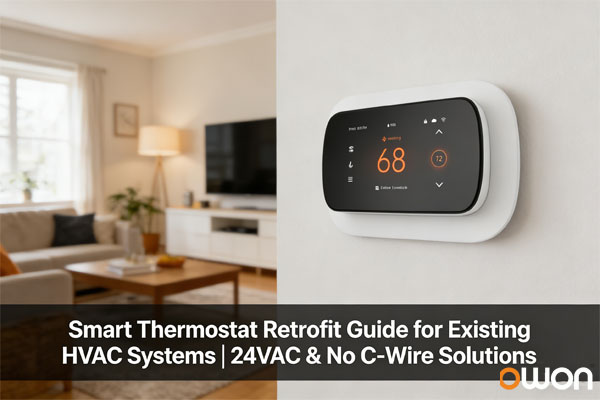
Choosing the Right 24VAC Smart Thermostat for Retrofit Projects
For legacy systems, compatibility is more important than advanced features. A good retrofit thermostat must support:
• Standard 24VAC HVAC control
• Multi-stage heating and cooling
• Heat pump or furnace systems
• Reliable WiFi connectivity
• Stable operation without frequent power interruption
Example Retrofit-Friendly Options
Our WiFi thermostat range is engineered for residential retrofit scenarios:
PCT523 24VAC WiFi Thermostat
• Compact design for wall replacement
• Reliable scheduling and remote control
• Works with retrofit wiring setups
PCT533 WiFi Thermostat with humidity and occupancy control
• 24VAC system compatibility
• Designed for higher-end retrofit and energy-efficient homes
These devices allow contractors to modernize HVAC control without replacing the heating system.
Wireless Thermostat Installation: When Wiring Is Limited
In certain homes, running new wires is not feasible. This is where wireless thermostat installation strategies become valuable.
Wireless or hybrid solutions can include:
• Thermostat + wireless room sensor combinations
• Gateway-connected control systems
• Smart thermostats integrated into broader IoT HVAC platforms
Wireless deployment helps retrofit contractors:
✔ Avoid wall damage from rewiring
✔ Speed up installation time
✔ Expand zoning capability in older homes
✔ Improve comfort without structural changes
Step-by-Step Smart Thermostat Retrofit Workflow
Step 1 — Evaluate Existing Heating System
Identify whether the home uses:
• Furnace
• Boiler
• Heat pump
• Radiant heating
Check wiring configuration and voltage.
Step 2 — Identify C-Wire Availability
If missing, plan for:
• C-wire adapter
• Power module
• Retrofit-friendly thermostat
Step 3 — Select a Compatible Smart Thermostat
Choose a 24VAC smart thermostat designed for legacy HVAC systems.
Step 4 — Install and Configure
Mount thermostat, connect wires or power module, and complete WiFi setup.
Step 5 — Enable Smart Features
Configure schedules, remote access, and optional energy optimization settings.
Benefits of Smart Thermostat Deployment in Older Homes
Upgrading control—rather than equipment—delivers measurable results:
✔ Lower heating energy consumption
✔ Better temperature consistency
✔ Remote control convenience
✔ Increased property value
✔ Easier integration into home energy systems
For property portfolios and retrofit projects, these upgrades scale quickly.
When to Consider Advanced Control Features
Some retrofit projects benefit from additional capabilities such as:
• Occupancy-based control
• Humidity monitoring and adjustment
• Multi-zone sensor integration
• Smart scheduling automation
Higher-end thermostats provide more comfort control and efficiency gains in premium retrofit environments.
Considerations for Professional Deployment
For contractors, system integrators, and HVAC solution providers, retrofit projects require:
• Flexible wiring compatibility
• Stable long-term device performance
• Platform integration options
• Scalable thermostat supply for multi-property projects
Professional manufacturers that specialize in HVAC IoT controls can support customized firmware, branding, and integration needs for large-scale residential deployments.
Final Thoughts
Deploying smart thermostats in existing residential heating systems is no longer technically complex—it simply requires the right retrofit strategy and compatible hardware.
With modern smart thermostat retrofit solutions, thermostat without C wire challenges can be overcome, and wireless thermostat installation approaches allow smart control to be added even in older homes without major renovation.
Upgrading control is often the fastest and most cost-effective way to improve residential heating efficiency today.
Post time: Feb-01-2026